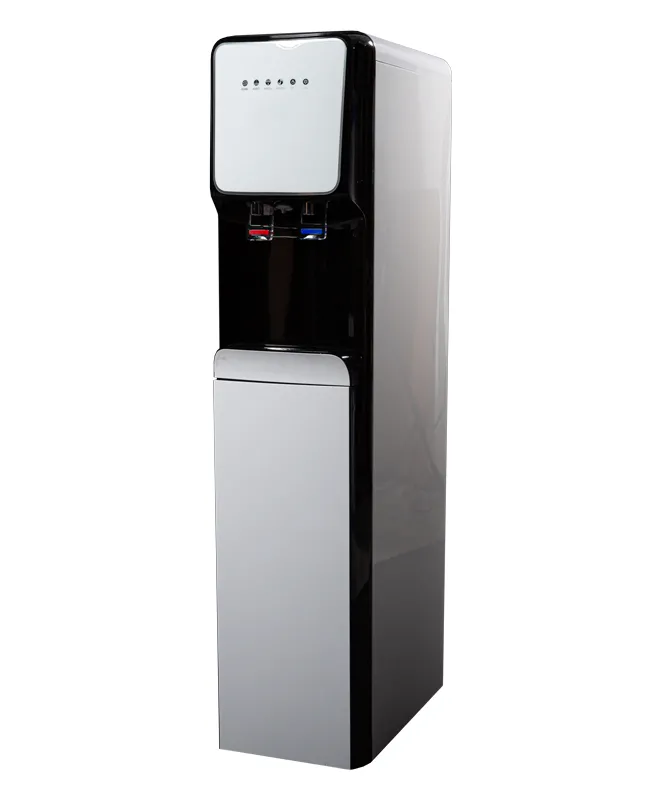


Filtered Water Dispenser 116 cm

116 cm filtered water dispenser with a multi-stage filtration system, which is connected directly to the water supply network and meets the highest international standards.


The water dispensers contain:

  • Sediment filter – removes dust, rust, and sediment
  • Carbon block filter – removes chemicals, chlorine, and solvents
  • Reverse osmosis membrane/UF filter 0.01 micron – removes all particles, including viruses with a size greater than or equal to 1 micron. Removes lead, arsenic, mercury, and limescale.
  • Carbon block filter – final purification.
  • T33 filter – removes chlorine and improves the taste and smell of the water.
  • Ultraviolet lamp – destroys bacteria in the tank.

Components Parameters
Purified water flow rate ≥11.8 L/H
Cooling 9℃
Heating temperature 90℃
Ice water tank 2 L
Hot water tank capacity 1 L (dry-run protection)
Water reservoir capacity 3.0 L
Additional water purification capacity 2000 L
Voltage 110V/50Hz or 220V/60Hz
Power Hot water tank: 500W
Compressor: 100W
Main machine: 650W
Purified water : wastewater 1:2
Water inlet Municipal tap water
Suitable water pressure 0.1-0.4 Mpa
Suitable temperature 4-38℃
Filter lifespan 16-12 months
RO membrane lifespan 12 months
Package size (mm) 460x255x1160 mm
Net weight 18 kg
Suitable number of people 1 to 50

How does the water dispenser work?

It removes a large portion of contaminants, insecticides and pesticides, benzenes, heavy metal salts, nitrates, nitrites, and various substances capable of causing bacteria, viruses, and parasites.

It removes chlorine, unnatural tastes and odors, and improves the taste of the water.

Silver ions added to the plastic components prevent the growth of microorganisms.

It destroys bacteria and prevents their recurrence.

Stylish and aesthetically designed, the dispensers are made from the highest-quality materials and are suitable for any interior.

The multi-stage filtration system helps prevent environmental pollution by:

– Helping to reduce carbon dioxide emissions and other harmful emissions caused by the production, distribution, and disposal of plastic bottles.

– Reducing energy consumption.

– Reducing dependence on oil and fossil raw materials.

arrow